Wednesday, 21 April 2021
Working the numbers at night
The gradual release on lockdown has allowed the reopening of not just pubs with gardens and Primark but bookshops too. Good. But I’m not sure that this is going to make much difference to sales of CBe books.
In theory, independent bookshops are almost by definition supportive of small presses. In practice, very, very few independent bookshops (with three or four honourable exceptions) have ever stocked CBe titles on a regular basis. When a customer asks a bookshop for a particular title, often the bookshop will check if it’s in stock at Gardners, the main wholesaler, and if not they will tell the customer the title is not available; they will choose not to order from CBe’s trade distributor. When I take books into bookshops myself, they may agree to take one or two copies on a sale-or-return basis – agreeing to pay for those copies (less trade discount) in three months’ time if they have sold, and requiring me to chase them for that. I know bookshops have to pay rent but those are not supportive practices.
CBe’s trade distributor, fielding orders from bookshops and online retailers, is Central Books. I also sell books through the website – but in a usual year, around five times as many books are sold through Central Books. The past year has not been usual. In fact, the sales pattern has been reversed. April 2020 to March 2021, the numbers of books sold through Central Books was 73% less than the previous year; in the same period, the number of books sold through website orders was 135% more than the previous year. Gross sales income (before deduction of costs) from all sales for 2020/21 was just 11% lower than the 2019/20 figure.
I’m writing here about CBe; other presses will have other tales to tell. The actual numbers involved (as opposed to percentages) are small. Of the 68 titles published since 2007, 22 have sold fewer than 100 copies through Central Books; two titles have sold more than 3000 copies through Central; six others have topped 1000. How to increase those numbers? I could ditch Central Books and try another distributor, or I could ditch the present sales agent (who promotes the list to bookshops) and try another … but publishers complaining about sales agents is as traditional as authors complaining about publishers, and I’m not persuaded that swapping x for y would make a significant difference. I could – in fact I should: I owe it the authors – scale up (adding in marketing know-how and applying for ACE funding to do this), but there’d be no guarantee of extra sales to support the extra costs, and worry about taking on books that I wasn’t confident would sell in numbers would play a much larger part in decision-making than it currently does.
What’s kept CBe going over the past year has largely been the Lockdown Subscription – 10 books of your choice over 10 weeks for £70, with extras thrown in. Thank you to all who have pressed the button. It’s still available. Three new 2021 CBe titles (by Roy Watkins, Dan O’Brien, Nuzhat Bukhari) are now in print, and another two (by Leila Berg, Charles Boyle) are up on the website for pre-orders; any or all of these can be included in a subscription.
Sunday, 28 March 2021
Books, beard, soup
Clocks have gone forward, the year already a quarter gone, and here’s a little stock-taking of recent and about-to-be books:
Spring Journal by Jonathan Gibbs, an urgent, angry account of the early months of Covid that borrows the form of Louis MacNeice’s Autumn Journal and is approved by the TLS: ‘Aiming somewhere halfway between cheap pastiche and serious homage, Gibbs hits his mark. He nails Autumn Journal’s casual, yawning metres and late-to-the-party rhymes, its balance of didacticism and doubt.’
Simple Annals by Roy Watkins. Comments emailed from early readers: ‘This book is a masterpiece’; ‘Simple Annals is quietly devastating’; ‘The intimacy and the perfectly targeted and delineated images are just very moving. Wonderful’ ; ‘What a find! It's so vivid and gripping’; ‘I have not been so affected by a book in a long time.’ Someone please write a review in a proper public space.
A Story that Happens: on playwriting, childhood and other traumas by Dan O’Brien: four essays written during the four years that Trump was occupying the White House, and during the aftermath of cancer, cannot be about just the craft of writing. If you order this from the website and would like a copy of O’Brien’s poetry collection Scarsdale added in free, write ‘Scarsdale’ under ‘instructions to merchant’ as you check through the PayPal; or send me an email.
Brilliant Corners by Nuzhat Bukhari (not published until May – printout of cover in the above photo, because finished copies not yet in – but copies available in April if you order from the website). A Poetry Book Society Recommendation. Abigail Parry: ‘A collection that is abstract and adamant, sparkling, ruthlessly sharp.’
I have grown a lockdown beard and I have cooked and eaten 22 recipes sent by CBe writers (documented on previous posts on this blog, January to March). Here is the 23rd: from Todd McEwen (The Five Simple Machines; Who Sleeps with Katz), ‘a smoked fish soup I invented myself’: smoked haddock, potatoes (waxy), celery, onion, turmeric, saffron, paprika, stock and wine and milk. This is a very fine soup. CBe has no ‘submission guidelines’ but if it did, here’s how they might begin: send me a recipe first, so I’ll know how your writing will taste.
Note: for technical reasons (wrong kind of leaves on the track?), neither Agota Kristof’s The Notebook nor Will Eaves’s Murmur are available from the website. But they are available to anyone who takes out a Lockdown Subscription.
Monday, 1 March 2021
More books, less food
From April 2020 to February 2021 sales of CBe books out of Central Books, the distributor, were 75% down on the same period last year. I imagine that if CBe was a very big publisher, dependent on volume of sales, this would be disastrous. Given that the actual numbers are pretty small we’ll muddle through, but during Covid selling books direct from the website has been the main means of survival – especially the Lockdown Subscription offer of 10 books (plus extras) for £70 (UK only, free postage). This is still available: see the website home page. Some subscribers come back for second helpings.
The new books so far this year are Roy Watkins’s Simple Annals, a memoir (or re-living) of childhood in Lancashire in the 1940s; and Dan O’Brien’s A Story that Happens: On playwriting, childhood, and other traumas, four essays written (one per year) during the Trump presidency, with an introduction written during the US elections last November.
A few days before the first UK lockdown took effect in March last year, Jonathan Gibbs began writing what became Spring Journal, a week-by-week record (based on Louis MacNeice’s Autumn Journal) of a bad, exhausting year. We are still looking for ways in which to articulate the experience of living with Covid: this fluent, urgent, angry book helps.
All the new books can be included in the Lockdown Subscription: you choose.
The last several newsletters have featured recipes from CBe writers. With this, just one plate of food, below. This is the 22nd recipe; previous ones are still available on this Sonofabook blog.
22 Sort-of Tagine from Patrick McGuinness (essays next year from CBe). ‘This is from the place of my birth and first childhood, Tunisia … The recipe was never written down, and was always more of a freeform around three fixed motifs: ras el hanout powder, harissa powder or paste, and preserved lemons (the ones in jars are better than the home-made hipster-shop ones because of the large amounts of sour juice which goes into the tagine and tastes delicious in a cocktail too – add it to gin or vodka martini).’ I overdid the lemons but do not regret it.
The new books so far this year are Roy Watkins’s Simple Annals, a memoir (or re-living) of childhood in Lancashire in the 1940s; and Dan O’Brien’s A Story that Happens: On playwriting, childhood, and other traumas, four essays written (one per year) during the Trump presidency, with an introduction written during the US elections last November.
A few days before the first UK lockdown took effect in March last year, Jonathan Gibbs began writing what became Spring Journal, a week-by-week record (based on Louis MacNeice’s Autumn Journal) of a bad, exhausting year. We are still looking for ways in which to articulate the experience of living with Covid: this fluent, urgent, angry book helps.
All the new books can be included in the Lockdown Subscription: you choose.
The last several newsletters have featured recipes from CBe writers. With this, just one plate of food, below. This is the 22nd recipe; previous ones are still available on this Sonofabook blog.
22 Sort-of Tagine from Patrick McGuinness (essays next year from CBe). ‘This is from the place of my birth and first childhood, Tunisia … The recipe was never written down, and was always more of a freeform around three fixed motifs: ras el hanout powder, harissa powder or paste, and preserved lemons (the ones in jars are better than the home-made hipster-shop ones because of the large amounts of sour juice which goes into the tagine and tastes delicious in a cocktail too – add it to gin or vodka martini).’ I overdid the lemons but do not regret it.
Friday, 19 February 2021
Lockdown CBe food, part 6
Series 1, episode 6. There are books too. The official publication date of Roy Watkins’s Simple Annals, a memoir of early childhood in Lancashire, 1940s, is this week: ‘There isn’t an iota of sentiment or nostalgia in his recollection partly because the past isn’t embalmed but seen as an ecstatic and traumatic living root and presence in the writer’s being ... Watkins is entirely original and this book is a masterpiece.’ And printed copies of Dan O’Brien’s A Story that Happens are in: a book that doesn’t so much teach about writing but learns, alongside the reader. Passing on knowledge from experience is not a thing we seem be good at; this book does precisely that. Meanwhile …
18 Kozinaki from Caroline Clark (Sovetica forthcoming from CBe). From Georgia; made by the author in Canada and Moscow in winter. Pan-roast nuts and seeds, traditionally walnuts but any kind; melt some sugar in honey, pour the nuts into the syrup and stir until all are well coated; spread out on a baking tray lined with baking paper, use another sheet of baking paper to press down and flatten, cover and leave outside in the garden or on the balcony to let the kind of temperatures we’ve been having this month harden it. Break off pieces, eat.
19 Aloo and Baingan Salan (Aubergine and Potato Curry) from Nuzhat Bukhari (Brilliant Corners coming in May). Aubergine, potatoes, tomatoes; onion, garlic, ginger, turmeric, green chilli pepper, garam masala. Serve with yogurt into which you’ve stirred chopped mint, and naan bread. Eat with your fingers. Feel very warm.
20 Squirrel from Lara Pawson (This Is the Place to Be). This was one of the first recipes sent to me in early January, but squirrels don’t just fall out of trees (or if they do, it’s usually onto a branch of the next tree along). Two possible scenarios were worrying me: (a) I wouldn’t like it; (b) I’d like it so much I’d want squirrels every week. Fortunately for everyone, including squirrels, the first prevailed: there’s wine and rosemary and plenty of garlic in here, but despite long slow cooking the meat still clung to the bones. I doubt the hazelnuts I forgot to add – despite having them ready – would have changed things. Lara is encouraging me to try again with a squirrel her dog caught today, not a frozen one.
21 Stuffed Monkey from Lesley Levene (who has copy-edited or proofread more books, including many of the CBe titles, than I’ve had hot dinners). One layer of dough (flour, butter, cinnamon, egg, sugar), then filling (candied peel, ground almonds, butter, sugar, egg yolk), then another layer of dough; bake for half an hour. Lesley: ‘My great-aunt used to say it’s called Stuffed Monkey because it was sold in a cake shop in the East End called Monnickendam.’ Or the monkey is myself, because it is very, very more-ish.
18 Kozinaki from Caroline Clark (Sovetica forthcoming from CBe). From Georgia; made by the author in Canada and Moscow in winter. Pan-roast nuts and seeds, traditionally walnuts but any kind; melt some sugar in honey, pour the nuts into the syrup and stir until all are well coated; spread out on a baking tray lined with baking paper, use another sheet of baking paper to press down and flatten, cover and leave outside in the garden or on the balcony to let the kind of temperatures we’ve been having this month harden it. Break off pieces, eat.
19 Aloo and Baingan Salan (Aubergine and Potato Curry) from Nuzhat Bukhari (Brilliant Corners coming in May). Aubergine, potatoes, tomatoes; onion, garlic, ginger, turmeric, green chilli pepper, garam masala. Serve with yogurt into which you’ve stirred chopped mint, and naan bread. Eat with your fingers. Feel very warm.
20 Squirrel from Lara Pawson (This Is the Place to Be). This was one of the first recipes sent to me in early January, but squirrels don’t just fall out of trees (or if they do, it’s usually onto a branch of the next tree along). Two possible scenarios were worrying me: (a) I wouldn’t like it; (b) I’d like it so much I’d want squirrels every week. Fortunately for everyone, including squirrels, the first prevailed: there’s wine and rosemary and plenty of garlic in here, but despite long slow cooking the meat still clung to the bones. I doubt the hazelnuts I forgot to add – despite having them ready – would have changed things. Lara is encouraging me to try again with a squirrel her dog caught today, not a frozen one.
21 Stuffed Monkey from Lesley Levene (who has copy-edited or proofread more books, including many of the CBe titles, than I’ve had hot dinners). One layer of dough (flour, butter, cinnamon, egg, sugar), then filling (candied peel, ground almonds, butter, sugar, egg yolk), then another layer of dough; bake for half an hour. Lesley: ‘My great-aunt used to say it’s called Stuffed Monkey because it was sold in a cake shop in the East End called Monnickendam.’ Or the monkey is myself, because it is very, very more-ish.
Sunday, 31 January 2021
Lockdown CBe food, part 5
First, something I prepared earlier: The Disguise: Poems 1977–2001, selected by Christopher Reid, comprises poems by myself from six collections originally published by Carcanet and Faber before the seam ran dry 20 years ago. If you order direct from the Carcanet website before the official publication date, 25 February, and enter the discount code DISGUISE25 you can get it for 25% off the cover price. Moving on …
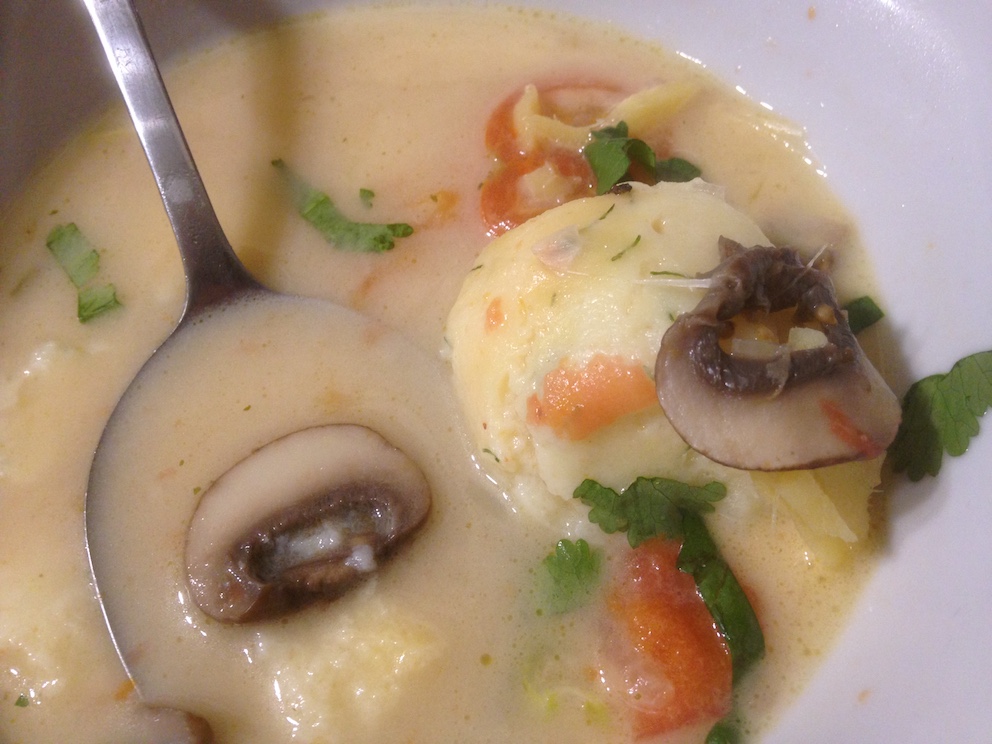
14 Matso Balls with Coconut Soup from May-Lan Tan (Things to Make and Break from CBe in 2014, now reissued by Sceptre). High fusion: ‘This recipe combines my two favourite soups, Jewish matzo ball and Thai tom kha.’ The matzo balls are made with chickpea flour, ‘which seems to combine better with the flavours of the soup’. The soup – ah, the soup – is a killer, a gentle one, and for this I really need to spell out the ingredients (stock, shallot, galangal or ginger, lemongrass, cherry tomatoes, mushrooms, kaffir lime leaves, fish sauce, birds-eye chillis, coconut milk, spring onion, lime juice) and their precise quantities, but that’s not how we’re doing things here (so you’ll have to email me for the full recipe). Completely delicious.
15 Rabbit, from Beverley Bie Brahic (White Sheets; Hunting the Boar; translator of Francis Ponge, Unfinished Ode to Mud, and of Apollinaire, The Little Auto. Beverley offered two rabbit recipes; in the first one you slather the rabbit (whole or jointed) with French mustard, roast, then deglaze the roasting pan with cream, which gives you the sauce. Because this was my lockdown birthday supper I opted for the second recipe, which involves dousing the lightly browned meat (and carrots and bacon or pancetta) with brandy and flambĂ©-ing, which is more fun than blowing out any number of candles on a cake; then cook in cider (plus bouquet garni) for around 45 mins, add mushrooms and caramelised little onions and pour yourself another glass of wine or two before remembering to eat. There’s no hurry. It’s worth waiting for.
16 Apple Betty and Baked Custard from Ruth Fainlight (despite having no CBe title to her name, Ruth is officially an honorary CBe author). Apples baked with some form of crumble – here, mostly breadcrumbs, no flour, with orange zest – cannot lose. The new delight for me, because I’ve been too lazy to bother before, was the baked custard (milk, eggs, sugar, vanilla, a dusting of nutmeg). Cooked on a day when it was snowing; leftovers for breakfast next day (above).
17 Spaghetti aglio olio con pepperoncini from Julian Stannard (What were you thinking?). This is the man who ends a poem called ‘The Recipe’ thus: ‘I put one in the pantry/ and the other in the small / room along the corridor / and I said to myself, / not without a feeling of / triumph, I have separated / the eggs.’ Can we trust him in the kitchen? No eggs to separate here. Almost nothing: spaghetti cooked al dente and swirled into gently fried garlic and chilli pepper. ‘I don't bother with anchovies and all that shit but hey it might be nice too,’ says Stannard. Definitely anchovies. Optional: add a couple of cowboys to turn this into a Spaghetti Western.
14 Matso Balls with Coconut Soup from May-Lan Tan (Things to Make and Break from CBe in 2014, now reissued by Sceptre). High fusion: ‘This recipe combines my two favourite soups, Jewish matzo ball and Thai tom kha.’ The matzo balls are made with chickpea flour, ‘which seems to combine better with the flavours of the soup’. The soup – ah, the soup – is a killer, a gentle one, and for this I really need to spell out the ingredients (stock, shallot, galangal or ginger, lemongrass, cherry tomatoes, mushrooms, kaffir lime leaves, fish sauce, birds-eye chillis, coconut milk, spring onion, lime juice) and their precise quantities, but that’s not how we’re doing things here (so you’ll have to email me for the full recipe). Completely delicious.
15 Rabbit, from Beverley Bie Brahic (White Sheets; Hunting the Boar; translator of Francis Ponge, Unfinished Ode to Mud, and of Apollinaire, The Little Auto. Beverley offered two rabbit recipes; in the first one you slather the rabbit (whole or jointed) with French mustard, roast, then deglaze the roasting pan with cream, which gives you the sauce. Because this was my lockdown birthday supper I opted for the second recipe, which involves dousing the lightly browned meat (and carrots and bacon or pancetta) with brandy and flambĂ©-ing, which is more fun than blowing out any number of candles on a cake; then cook in cider (plus bouquet garni) for around 45 mins, add mushrooms and caramelised little onions and pour yourself another glass of wine or two before remembering to eat. There’s no hurry. It’s worth waiting for.
16 Apple Betty and Baked Custard from Ruth Fainlight (despite having no CBe title to her name, Ruth is officially an honorary CBe author). Apples baked with some form of crumble – here, mostly breadcrumbs, no flour, with orange zest – cannot lose. The new delight for me, because I’ve been too lazy to bother before, was the baked custard (milk, eggs, sugar, vanilla, a dusting of nutmeg). Cooked on a day when it was snowing; leftovers for breakfast next day (above).
17 Spaghetti aglio olio con pepperoncini from Julian Stannard (What were you thinking?). This is the man who ends a poem called ‘The Recipe’ thus: ‘I put one in the pantry/ and the other in the small / room along the corridor / and I said to myself, / not without a feeling of / triumph, I have separated / the eggs.’ Can we trust him in the kitchen? No eggs to separate here. Almost nothing: spaghetti cooked al dente and swirled into gently fried garlic and chilli pepper. ‘I don't bother with anchovies and all that shit but hey it might be nice too,’ says Stannard. Definitely anchovies. Optional: add a couple of cowboys to turn this into a Spaghetti Western.
Sunday, 24 January 2021
Lockdown CBe food, part 4
A pause between the food in the three previous posts and whatever’s coming next.
So I asked writers published by CBe writers to send me recipes, and almost without exception the ones they sent could have come in anonymously and I’d have still known who sent them. Everyone’s cooking has their fingerprint. Food is class and sex and history and childhood and heredity and politics and everything else.
Most of what I cook tastes same-ish, because it’s me cooking it. The versions I’ve cooked of the recipes I’ve been sent have often been a bit sloppy. (See the previous posts for the results so far.) That’s fine; your versions will be even more sloppy, or neater.
In the house I grew up in, food was mostly functional: eat to live, not live to eat. When I moved out of home, aged 17, my mum taught me how to cook an omelette. Roughly around then, an exotic place opened in the local market town in Yorkshire that served spaghetti. In my early 20s, someone asked me to chop garlic and I’d never done this before.
I didn’t really learn anything about food until I had people to cook for. Nor did my mother: when she married in 1948, her own mother gave her a book titled Essentials of Modern Cookery, which includes instructions on how to roast a heart (above). Jump a generation and I have photos of my sons at work on the cakes for their second birthday. This is so important. They know how to make things and not just for themselves.
(The great thing about baking, by the way, is that it usually doesn’t have to be timed for a particular point in a meal, and you can do it at 3 in the morning if that’s what you feel like doing. I have big anxiety about when to take cakes out of the oven, and err on the side of leaving them in too long. Black crusts and apologies and everyone says it’s lovely but it’s not.)
Most of the recipes that have come in are simple fare. In literature, plain cooking (like Orwell’s ‘plain style’) has a perceived moral value – you can tell the goodies from the baddies by what they eat. Kitty and Levin in Anna Karenina make jam and pick mushrooms while Oblonsky in Moscow swills down oysters from Germany with French champagne. On the other hand there’s Isak Dinesen’s Babette’s Feast, in which an austere Puritanical community in Jutland come to experience the joy, both physical and spiritual, that cooking as a form of art can bring.
The point being made in Anna Karenina about food is not just about keeping it simple but about its production and its sharing. Since March last year a Lockdown Subscription has been offered from the home page of the website – 10 books of your choice (actually I send at least a dozen, plus extras) for £65, post-free in the UK – and because of Covid restrictions this has been a main means of getting the books to readers. New (and repeat) subscribers are very welcome. Help me along here.
The mulberry tree in the photo below is in the back garden of Wiesiek Powaga, translator of Killing Auntie by Andrzej Bursa, in a village in Hungary. Each village in that region has its own distillery, in the way many villages had (and in many places still have) communal ovens, and Wiesiek translated the mulberries gathered in that net into palinka, a Hungarian fruit brandy. The photographs I don’t want to show are those of the food parcels sent out by catering companies in the UK to families whose children qualify for free school meals, because those photos are obscene: tinned baked beans for the poor despatched in one of the richest countries in the world by a political class (it includes me) that pores over the inventive and often very wonderful recipes in cookery books and magazine supplements. We can do better.
Wednesday, 20 January 2021
Lockdown CBe food, part 3
Recipes from CBe authors, part 3 of a series. Parts 1 and 2 are the previous posts.
9 CrĂŞpes filled with Spinach and Goat’s Cheese from Wiesiek Powaga (translator of Killing Auntie by Andrzej Bursa and In Sarah’s House by Stefan Grabinski, the latter out of print). Make the crĂŞpes (flour, eggs, milk, water; or you can buy them ready-made, I’m told). The filling: spinach (lots of it, the big-leafed kind, not ‘baby’ spinach) blanched and chopped, goat’s cheese mixed with yogurt, garlic. Roll the crĂŞpes into ‘pipes’ and fry gently in olive oil and butter. Adjustments: I put mine in the oven rather than re-frying. And, stupidly, I forgot all about the yogurt (but was generous with the goat’s cheese). (People do forget things in the kitchen, where it’s easy to get distracted. I once went to a supper where the host forgot to serve the soup; we eventually had it after the pudding.)
10< Highland Pie from J. O. Morgan (Natural Mechanical; Long Cuts; At Maldon; other titles from Cape). A version of shepherd’s pie or cottage pie but the shepherd and his cottage are Scottish so the meat element is haggis. Shop-bought haggis (vegetarian versions available), microwaved as the label tells you (10 minutes-ish), topped with mashed veg (here, potatoes, carrots, parsnips), plus optional grated cheese, then into the oven ‘for an unspecified time’, maybe half an hour. Haggis is fine but I still suspect that as with any food that insists on a certain day of the year (haggis on Burns Night, 25 January; turkey on Christmas Day), most people don’t much bother with it otherwise.
11 Lemon Pudding from Jack Robinson (An Overcoat; Robinson; Good Morning, Mr Crusoe). At last, a pudding. The recipe for this in Carol Shields’s The Stone Diaries (page 353: ‘Aunt Daisy’s Lemon Pudding’) is exactly as cooked by my mother; I was surprised to see my mother’s recipe in a novel, then realised that this has been cooked for generations by all mothers in the Western world, and this was Shields’s point. Butter, sugar, eggs, flour, lemon zest and juice, milk. In the oven for 40 minutes, during which it which it separates into cake-ish on top and something much more slippery underneath. Plus single cream to serve.
12 Polenta from Elise Valmorbida (whose novel The TV President was published by CBe in 2008, now out of print, and who introduced the screenplay Saxon, CBe, 2008; Faber published her novel The Madonna of the Mountains in 2018). Polenta: ‘The smell is nostalgia, so it is the past, but it is also hunger, so it is the future.’ A bit of a fudge here: Elise uses coarse-ground cornmeal, slowly raining it into a very big pan of boiling roiling water until the consistency feels right, stirring all the time over low heat until the polenta starts detaching from the sides of the pan, ‘usually in 40 minutes to an hour’. Elise has strong arms. Pour ‘with an energetic shove’ onto a large wooden board and let settle ‘into a nice soft round form, ready to cut’. I’m lazier: fine-ground polenta so less stirring; I mix in milk and/or cream and parmesan and a few chili flakes, and I’m happy with a sludge (think lava flow) rather than anything cut-able. Elise’s grandmother won’t speak to me. Here, with a sauce of broccoli and mushrooms; olive oil drizzled over, and lots of lemon juice.
Can we pack in another one? Remember rush hour on the Tube when passengers were packed in like sardines?
13 Sardine Butter from Paul Bailey (Inheritance). From a writer who at Christmas cooked a partridge inside a pheasant inside a duck inside a capon, layered with two kinds of stuffing, this may appear a little ridiculous. But it has pedigree: included in a book of recipes by Marcel Boulestin in the 1930s, it was thoroughly approved by Elizabeth David. It’s probably not original to Boulestin: for as long as sardines have been sold in cans people have likely been doing this to them – mashing them to a paste with an equivalent weight of good unsalted butter, adding a little seasoning, keeping them in a jar in the fridge and spreading them on hot bread when hungry. Before mashing, take off the skin (if you want to) and pick out the bones (unless you are Scott, the boy I sat next to at school in the 1960s who ate his breakfast kippers bones and all, not just the tiny ones but the thick one down the middle).
9 CrĂŞpes filled with Spinach and Goat’s Cheese from Wiesiek Powaga (translator of Killing Auntie by Andrzej Bursa and In Sarah’s House by Stefan Grabinski, the latter out of print). Make the crĂŞpes (flour, eggs, milk, water; or you can buy them ready-made, I’m told). The filling: spinach (lots of it, the big-leafed kind, not ‘baby’ spinach) blanched and chopped, goat’s cheese mixed with yogurt, garlic. Roll the crĂŞpes into ‘pipes’ and fry gently in olive oil and butter. Adjustments: I put mine in the oven rather than re-frying. And, stupidly, I forgot all about the yogurt (but was generous with the goat’s cheese). (People do forget things in the kitchen, where it’s easy to get distracted. I once went to a supper where the host forgot to serve the soup; we eventually had it after the pudding.)
10< Highland Pie from J. O. Morgan (Natural Mechanical; Long Cuts; At Maldon; other titles from Cape). A version of shepherd’s pie or cottage pie but the shepherd and his cottage are Scottish so the meat element is haggis. Shop-bought haggis (vegetarian versions available), microwaved as the label tells you (10 minutes-ish), topped with mashed veg (here, potatoes, carrots, parsnips), plus optional grated cheese, then into the oven ‘for an unspecified time’, maybe half an hour. Haggis is fine but I still suspect that as with any food that insists on a certain day of the year (haggis on Burns Night, 25 January; turkey on Christmas Day), most people don’t much bother with it otherwise.
11 Lemon Pudding from Jack Robinson (An Overcoat; Robinson; Good Morning, Mr Crusoe). At last, a pudding. The recipe for this in Carol Shields’s The Stone Diaries (page 353: ‘Aunt Daisy’s Lemon Pudding’) is exactly as cooked by my mother; I was surprised to see my mother’s recipe in a novel, then realised that this has been cooked for generations by all mothers in the Western world, and this was Shields’s point. Butter, sugar, eggs, flour, lemon zest and juice, milk. In the oven for 40 minutes, during which it which it separates into cake-ish on top and something much more slippery underneath. Plus single cream to serve.
12 Polenta from Elise Valmorbida (whose novel The TV President was published by CBe in 2008, now out of print, and who introduced the screenplay Saxon, CBe, 2008; Faber published her novel The Madonna of the Mountains in 2018). Polenta: ‘The smell is nostalgia, so it is the past, but it is also hunger, so it is the future.’ A bit of a fudge here: Elise uses coarse-ground cornmeal, slowly raining it into a very big pan of boiling roiling water until the consistency feels right, stirring all the time over low heat until the polenta starts detaching from the sides of the pan, ‘usually in 40 minutes to an hour’. Elise has strong arms. Pour ‘with an energetic shove’ onto a large wooden board and let settle ‘into a nice soft round form, ready to cut’. I’m lazier: fine-ground polenta so less stirring; I mix in milk and/or cream and parmesan and a few chili flakes, and I’m happy with a sludge (think lava flow) rather than anything cut-able. Elise’s grandmother won’t speak to me. Here, with a sauce of broccoli and mushrooms; olive oil drizzled over, and lots of lemon juice.
Can we pack in another one? Remember rush hour on the Tube when passengers were packed in like sardines?
13 Sardine Butter from Paul Bailey (Inheritance). From a writer who at Christmas cooked a partridge inside a pheasant inside a duck inside a capon, layered with two kinds of stuffing, this may appear a little ridiculous. But it has pedigree: included in a book of recipes by Marcel Boulestin in the 1930s, it was thoroughly approved by Elizabeth David. It’s probably not original to Boulestin: for as long as sardines have been sold in cans people have likely been doing this to them – mashing them to a paste with an equivalent weight of good unsalted butter, adding a little seasoning, keeping them in a jar in the fridge and spreading them on hot bread when hungry. Before mashing, take off the skin (if you want to) and pick out the bones (unless you are Scott, the boy I sat next to at school in the 1960s who ate his breakfast kippers bones and all, not just the tiny ones but the thick one down the middle).
Subscribe to:
Posts (Atom)